A3 Size Microsoft Word Mac
Here’s an interesting problem I faced the other day. I needed to insert a section break for an A3 page into a Word document. Everything went fine until I tried to select A3 as the paper size for that section — A3 wasn’t listed! It had been listed for earlier documents, so I was surprised that it wasn’t listed for the document I was. The solution is simple enough: install a model of printer that includes A3 size. The best idea is to install the same model that your client is using, then you know the margins will be right. Use File for the port, since you don't actually have to print to it. Author of 'OOXML Hacking - Unlocking Microsoft Office's Secrets', now available.
It's recommended to turn Word into PDF if you would like to secure your files. Here are 2 easy ways on how to turn Word into PDF with original layout. Favorite Answer From Word's Format menu select Document and then Paper Size. If there is no A3 listed select Custom and set 16.5 x 11.7 in that being the size of an A3 page. Click OK and then the. . Automatically attach scanned documents to an email. Create image only or searchable PDF files. Scan documents into PDF, Microsoft Word,. Hi I'm having a problem with one of our users, they are trying to print in A3 but there is no A3 size available in the paper size options. It's an XC560 printer, printing from a MacBook on High Sierra but with the driver below: Yosemite - Mac os driver for 10.10 on Fiery Ex550/560 2.0 on xc 560/57. Free Office 365 for the web with popular apps like Outlook, Word, PowerPoint, Excel, and OneNote so teachers and students can work together, communicate seamlessly, and create amazing content. All the features in A1 plus full access to the Office desktop apps and additional management and security.
Steps
- Open Microsoft Word. If you’re using Windows, click the Windows menu, select Microsoft Office, then Microsoft Word. If you’re using a Mac, you should find the Microsoft Word icon on the dock or launchpad.
- Click Symbol. You’ll see it on the panel at the top of the screen, toward the right.
- Click the “Font” drop-down menu. It’s near the top of the window.
- Click the “Subset” drop-down menu. It’s right next to the “Font” menu.
- Click the circled number you want to add.
- Click Insert. The circled number now appears in your Word document.
Do you wonder why Word 2007 documents have a new file extension, docx? After all, Word documents have used the filename suffix .doc for years. So why the X in Word 2007?
Why the X in docx?
The X stands for XML (Extensible Markup Language), which is the programming language behind the scenes in Office 2007 programs.
Previous versions of Word were based on binary data. Binary data is, by nature, prone to corruption, and “bloated.”
By changing the background code, Microsoft was able to create new tools and features in Word 2007 that would not have been possible otherwise.
What’s so great about XML?
Compared to binary files, XML is compact, portable, and stable. In other words, a Word 2007 document is less susceptible to irreparable damage.
Smaller file sizes
Let’s perform an experiment to compare file sizes between identical binary- and XML-based documents.
For this experiment, I created a Word document containing text and a photo:
Then, I saved it as a Word 97–2003 (binary) document and also as a Word 2007 (XML) document.
As you can see, the size of the .doc file is 102kb, but the size of the .docx file is 91kb. That is a savings of 11 kb.
Eleven kilobytes may not seem like much, but this is a very small file with only two sentences of text and one photo. Now imagine millions of large documents across an entire organization…data storage requirements can significantly be reduced by converting older Word documents to the docx format.
XML is portable
XML is an open specification. It is easily shared between different operating systems, such as Windows, Unix, or Mac OSX.
A Word 2007 file is actually a zip folder containing XML files and files that contain other information such as graphics and styles.
Anyone using a text or XML editor can unzip a Word 2007 document, then open the XML file that contains the textual data.
Unzip a docx file
Let’s unzip a Word document so you can see XML in action.
Open Word 2007 and create a document with text and some graphics, then save it as test.docx to your desktop. Now change the name of the file to test.zip.
Unzip the file using the unzip utility that comes with Windows or your favorite Zip program.
Here is how to open test.zip using Windows XP:
- Right-mouse click the test.zip icon on your desktop.
- Select Extract all from the menu.
- Click Next and accept the default folder name and location.
- Click Finish.
A3 Size Microsoft Word Macbook Pro
You should now have a folder named Test on your desktop. If you open the folder, you will see several folders and an XML file inside.
A3 Size Microsoft Word Mac Download
Open the Word folder. The document that contains your textual data is named document.xml. Open it with a text editor and view it. You will see the XML markup, but you can also see bits and pieces of your original text mixed in.
You can find your photo(s) in the Media folder.
Word 2007 documents are less prone to irreparable damage
The unzipping technique is one way to recover file information if a docx file becomes corrupted.
But one advantage to using docx files, is that they are less likely to become corrupted in the first place. That is because XML is more stable than binary data.
If a Word 2007 document does become damaged, you can try an Open and Repair procedure to recover the file. (See my Troubleshooting tips for instructions.)
Using compatibility mode
One problem with the new docx format is that it can cause difficulties when sharing documents with users of previous versions. Often, co-workers complain that they cannot open docx files. (This is usually because they don’t have the compatibility pack installed.)
But Word 2007 is backward compatible, meaning it was designed to work with previous versions.
You can work with and save Word 2007 documents in the format of previous versions (97-2003)…these documents are saved with the .doc file extension. This is called compatibility mode.
A3 Size Microsoft Word Macro
However, working in compatibility mode will cause you to lose some functionality. (For instance, you will not be able to use the newest chart features.)
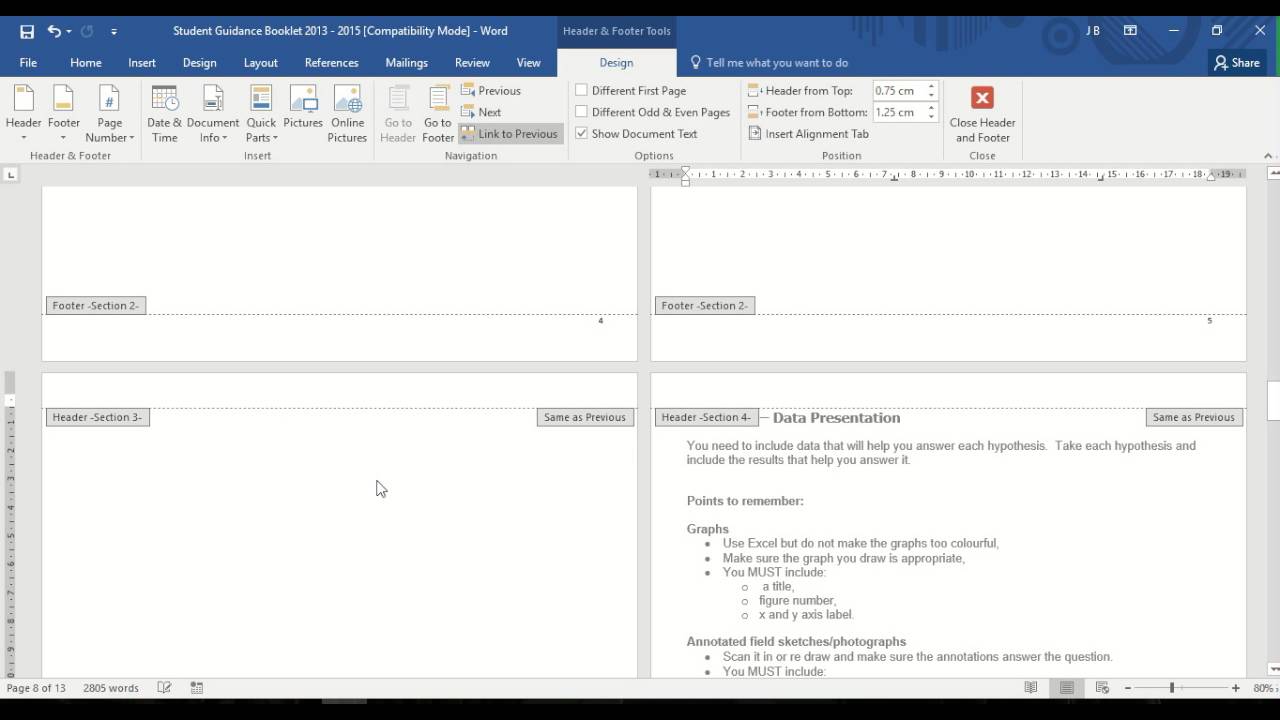
You can always tell if you are in compatibility mode by looking at the title bar on the ribbon.
The name of your document will be followed by [Compatibility Mode].
If you share documents with co-workers who use previous versions you can still work in Word 2007 mode so you can take advantage of its features, but also save it as a .doc file to share. Then you can have the best of both worlds.