Softimage Mod Tool
To install the SoftImage XSI Mod Tool on Windows Vista start an command prompt under an adminstrator context (Right click on the command prompt icon and select run as Administrator), then browse to the directory where you downloaded the mod tool and execute the setup file. When finished the Plugin works fine and all is now right. Here i go through the tools i use quickly. I will get more in depth with them when we begin modelling next session. It is crucial to have a fast workflow so you don't waste time looking for.
When we last left off we had learned how to link Autodesk’s SoftImage Mod Tool to XNA Game Studio and how to create a project in XNA Game Studio 4.0 (inside of Visual Studio 2010) and create a simple phone project that allows us to use models and animations.
The next thing we are going to do is actually do a little modeling…
So to review we have our XNA Game Studio 4.0 project open inside of Visual Studio 2010 (in this case a Windows Phone 7 game project), and we are just about to start modeling. So let’s recap a bit so we can get started.
Autodesk Softimage Mod Tool Pro 7.5 software is functionally identical to the Mod Tool, but has an End User License Agreement that allows users to produce assets for games sold via Microsoft's Xbox Live Community Games. Autodesk Softimage Mod Tool Pro 7.5 is available only with Microsoft's XNA Creator's Club Premium membership.
We create our project in XNA Game Studio 4/ Visual Studio 2010.
Next we open Autodesk’s SoftImage Mod Tool and connect to our xna project
We do this by selecting the XNA Game Studio connect to XNA Project Menu (if you don’t see this menu item then you have to go back and install all of the updates including XNA Game Studio connectivity.
In my case the folder my project is located in is:
C:UsersdonDocumentsvisual studio 10ProjectsWindowsPhoneGame3DWindowsPhoneGame3DWindowsPhoneGame3D
If you don’t know how to find where yours is saved just go back into Visual Studio/XNA Game Studio 4 and right click on the project icon in the solution explorer and select OPEN FOLDER IN WINDOWS EXPLORER.
Then let the breadcrumb tell you where it’s at.
Next we select create model from the XNA Game Studio Menu. You must do this first before you start modeling so the program knows how to export the model you make into the appropriate XNA format.
After doing so you will notice a simple CUBE on the screen as our place holder model.
We probably can’t do much with this as a model so we will need to remove the base shape so we can model something a bit cooler.
Now click on the SCENE button to bring up the scene explorer.
This pops open the scene explorer where we can click on the “Mesh” item in the lower part of the tree to select and highlight the cube mesh. Now we can hit delete on our keyboard to remove the cube/mesh from our scene taking great CARE to make sure the XNA_Asset container remains in the scene root for the model. If this isn’t there we cannot EXPORT our model properly back to our XNA project in Game Studio 4.x.
Now we can start to create our model.
For this model I am going to generate a UXMAGIC style top hat. I am not going into great detail with the model, so don’t expect an exact replica, just something decent enough for this example.
Let’s now rename our model to tophat. It’s important to name our objects.
Going back to our scene explorer I double click on the word model in the treeview.
This will bring up a textbox where I can edit the model’s name and I can change this to TopHat
Now we go into xsi mod tool in MODEL click on Primitive and from the pop-up menu select Polygon Mesh-> Cylider
You will then see a Cylinder on the design surface and a properties panel for the cylinder where we can adjust some of it’s design characteristics.
In our properties we can adjust the radius to be 4 and the height to be 1 to form the base of our TopHat
Next we can adjust the geometry Subdivisions settings:
U: 12 V: 1 Base: 4
Your views should then look something like this:
In each view there are several navigation tools available to track, zoom rotate and move around the world of your 3d Model.
While learning these is not the scope of this tutorial you will be more proficient at modeling after you learn these.
Now lets click on the expand gadget in the upper right corner of the front view to expand it full screen and lets scale the base of the hat down some.
now from the right side click on the select object panel
now click on the base of our hat object to select it
Next we will hit “X” so to bring up the scaling tool. We just want to scale one of the axis now the whole object. To scale the hole object we would also need to hold down the “SHIFT” key. When you do this you’ll see the pointer reflect “X-Y-Z” instead of just “X-Y”
For our model we just want to work on the “X-Y” axis so holding down SHIFT is not necessary.
If we have done this correctly you’ll see a XYZ access manipulation tool with square grips that we can move around to change the size of our object.
We should click down and pull on the GREEN “Y” grip to flatten the polygons down. if you did this right and you click down and pull the grip downward it will turn yellow.
Now we can unzoom and go back to our top view.
we can then use the navigation and pan-zoom cameral tools to get a closer look
Now from the model menu go to modify-> deform –>fold
The default settings should be just enough of an angle to handle what we are trying to do to tip the top hat brim a bit to the side. We will make one change though we will set the AMPLITUDE to 75 in the properties dialog that pops up.
So now we have constructed the base. Next we have to add the “trunk” of the hat.
Go to primitive –> Polygon Mesh –> Create Sphere to create our trunk,.
Our modeling surface will then look something like this.
Doesn’t look like at hat yet ? Does it ?? Next we will need to select the object in two views and move it into place resting atop and connected to the base.
Since the cylinder is already selected I will change it’s radius and height to something a bit more appropriate (Radius: 2Height: 3).
It should look like this.
Now all that’s left to do is position the trunk atop the base cylinder.
To do this the easiest method is selecting the “MANIPULATE tool. From any view select the eyetool.
from the pop-up menu (yes folks it’s a long one) select the manipulate menu.
pressing “B” is the keyboard equivalent to this and then we can click with our mouse right on the object pick it up and move it and scale it into place with ease.
While making the adjustments make sure you are checking positioning in top front and right views to make sure you are getting everything placed apropriately for rendering.
So now that just about finishes our modeling adventure. Let’s get this finished out so we can export and view this in our XNA phone game project.
HIT CTRL-ALT-A to SELECT ALL OBJECTS
Next click on the group button to group objects.
Now we have our geometry all grouped
Now lets save our scene.
On the main file menu select save as.
We’ll call this sample “ TopHatScene” so type that in the scene save textbox.
Next Click “OK” to save. Note the path of the content being saved to our XNA project.
clicking on the scene selection tool button should bring up our treeview that looks like this.
You should see in the treeview our named Model (TopHat with the XNA asset tag and inside of it should be two meshs our Base and our Trunk which I have named “Brim” and “Trunk” already using the mesh properties inspection tool.
Making sure our model is XNA game studio project compatible
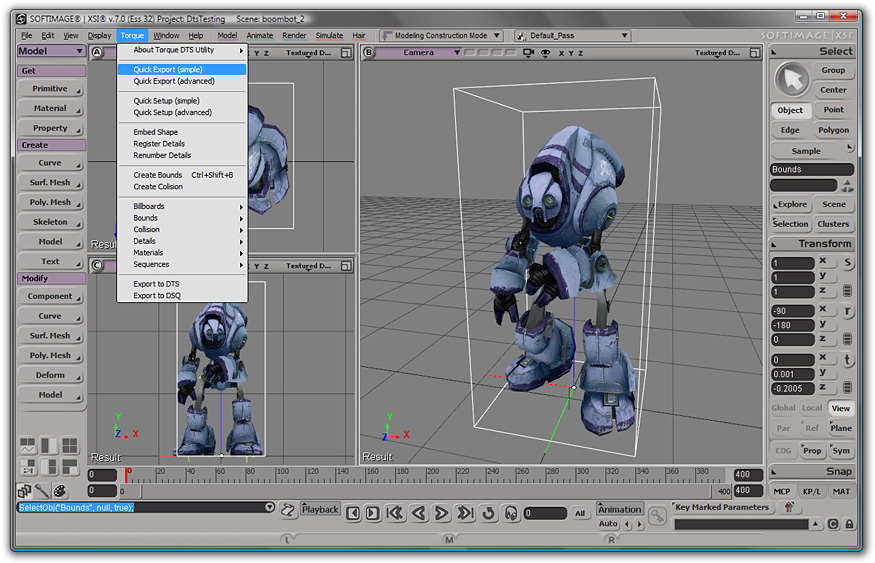
We now need to go to the Mod Tool’s XNA GAME STUDIO menu and “diagnose our model to make sure the meshs conform to XNA standards. If we don’t do this step it is very likely the image won’t display properly when the GPU renders it.
Click “OK” to begin DIAGNOSIS a report screen will pop-up.
Since this is a very very simple object we “passed” the tests. If there had been warnings we may have had to so some of the adjustments we learned in part two.
Most of the time you will find problems when default textures don’t get assigned to the model and you have to go back and assign a direct x texture. We’ll save that discussion for our texturing talk.
/ihome-bluetooth-mac-mouse-manual.html. So now we are going to do an FBX Export to export our model to our XNA Game Studio project.
Go to File –> Crosswalk –> Export FBX
Now we have to locate our visual studio project again to export the model to the proper directory. Mine is as follows.
C:UsersdonDocumentsvisual studio 10ProjectsWindowsPhoneGame3DWindowsPhoneGame3DWindowsPhoneGame3D
After we have navigated into the project you’ll notice like our visual studio/game studio 4 project before it’s made up of actually two projects a regular project and a content project just for hold content that will be displayed by the XNA GPU pipeline.
In the main project there is also a content folder with a subfolder called XSI. In it is stored the scenes and everything we have been working on inside of the AutoDesk SoftImage Mod Tool. I am going to go to the second project folder our content folder. I made a new folder to organize it all called models and then export
So to do that, in this case we want to export our content into the project in my case I am saving this export to:
C:UsersdonDocumentsVisual Studio 10ProjectsWindowsPhoneGame3DWindowsPhoneGame3DWindowsPhoneGame3DContentModels
type a name for our model export. For my project I am going to call it TopHat.fbx
Make sure ALL my export settings are correct.
Click “OK” to export our model.
Note: there is no animation to be exported so I am ignoring the button checked for animation even though it’s there.
If after the export you go back into XNA Game Studio/Visual Studio 2010 you do not see the model then you can go in and add it manually by going into the content project (make a Models Folder if you need to by right clicking on the content folder and add new folder from the pop-up).
Then to manually add the export to your SOLUTION right click on the Models folder you created and select Add->Existing Item.
Choose TopHat.fbx from the content folder location. This should already exist in the right folder placement under your Content/Models folder. The Visual Studio Solution may just be unaware it’s already there.
Softimage Mod Tool Download
Now your XNA Game Studio project should be set (be sure to re-save the project immediately and you have exported your first model.
We can check our export in Autodesk SoftImage’s Quicktime FBX Export Preview Tool also to check to see if we got all of the modeling right.
Displaying your model as part of the game….
The first thing we do is go back into Microsoft Game Studio 4 and open the file Game1.cs in the Solution Explorer.
Next we have to add some code to the main code that runs the game.
We need to find the class Game1 and add the following code below highlighted in blue.
We declare the model TopHat so we can import and use the mesh in our content folder called TopHat. Next we create a Matrix Array called boneTransforms. Every model has to have “bones” and some kind if skeleton to move it around even if it’s minimal.
Next we can declare cameraPosition so we can set the camera…
Next we declare aspectRatio (so we can render the 3d Model to the same aspect ratio as the screen we are displaying the scene out to.
Next we need something to track the hat’s position, so we’ll declare that as type Vector3
We also need to keep track of the hat’s rotation so we’ll declare a floating point point variable called hatRotation
next in the main game1 loop we have to use the game timer to set elapsed time and keep track of our movent so we add the line below in blue if it’s not present.
Next we have to move down to the game initialization routine and add the following code.
If the code gets hard to read (or smaller) just click on it to bring it up as a big picture.
The code above sets our Aspect ratio with is very important, as different displays have different aspect ratio, this code and the variable aspectRatio sets the ratio to be the width of the display divided by the height. It also sets the hat’s position and rotation to 0 at time it gets created or the game is initialized.
Next in the content load routine where we load up all of our models and 3D content into the pipeline we set our TopHat model to load it’s content from a folder called “Models”. Note the syntax, the ‘’ followed by the content name (not the file name). We also have to set up our boneTransforms to manipulate the object (based on the count from our matrix variable set from the mesh.
Next is our all-important game update routine. Everytime the game updates itself (which is many times until a button is pressed which calls exit() to close resources and end the game) this routine is called. We will in one line of code use this routine to rotate the hat based on our game timer.
We are almost done with the code. Next we go to the final section of our game code which draws our game/animation on the screen.
This is important because our model has no color and no real texture to it.
The next line copies our data for our bones from the TopHat model and informs the system to use that data for the bones.
Then we loops through each of the meshes and set the proper matrixes so everything is viewable properly .
The next line tells the camera to look at the TopHat and set’s it’s position.
We also then set our perspective field of view and in the next line of code turn on default lighting.
Then it’s time to draw/render the mesh (our TopHat) after those calculations and setup are done.
Then we tell it to draw the whole thing based on the game timer.
After you are done you will see video that looks like this.
Source code to the sample project will be available soon.
The neat thing about this code is it works great on Windows directly as well as the X-Box 360 with no problems (directly portable). Talk about connected experiences. Wow.
| Original author(s) | Softimage, Co. |
|---|---|
| Developer(s) | Autodesk |
| Initial release | 2000; 20 years ago (as Softimage XSI) |
| Stable release | 2015 / April 14, 2014; 6 years ago |
| Operating system | Linux, Microsoft Windows |
| Type | 3D computer graphics |
| License | Trialware |
| Website | www.autodesk.com/softimage |
Autodesk Softimage, or simply Softimage (/sɒftɪˈmɑːʒ/) is a discontinued 3D computer graphics application, for producing 3D computer graphics, 3D modeling, and computer animation. Now owned by Autodesk and formerly titled Softimage XSI, the software has been predominantly used in the film, video game, and advertising industries for creating computer generated characters, objects, and environments.
Released in 2000 as the successor to Softimage 3D, Softimage XSI was developed by its eponymous company, then a subsidiary of Avid Technology. On October 23, 2008, Autodesk acquired the Softimage brand and 3D animation assets from Avid for approximately $35 million, thereby ending Softimage Co. as a distinct entity.[2] In February 2009, Softimage XSI was rebranded Autodesk Softimage.
A free version of the software, called Softimage Mod Tool, was developed for the game modding community to create games using the Microsoft XNA toolset for PC and Xbox 360, or to create mods for games using Valve's Source engine, Epic Games's Unreal Engine and others. Sukhumvit set font download mac. It was discontinued with the release of Softimage 2014.
On March 4, 2014, it was announced that Autodesk Softimage would be discontinued after the release of the 2015 version, providing product support until April 30, 2016.[3]
Overview[edit]
Autodesk Softimage is a 3D animation application comprising a suite of computer graphics tools.
Modeling tools allow the generation of polygonal or NURBS models. Subdivision modeling requires no additional operators and works directly on the polygonal geometry. Each modeling operation is tracked by a construction history stack, which enables artists to work non-destructively. Operators in history stacks can be re-ordered, removed or changed at any time, and all adjustments propagate to the final model.
Control rigs are created using bones with automatic IK, constraints and specialized solvers like spine or tail. Optionally, the ICE system can be used to create light-weight rigs in a node-based environment. The rigging process can be sped up through the use of adaptable biped and quadruped rigs, FaceRobot for facial rigs and automatic lip syncing.
Animation features include layers and a mixer, which allows combining animation clips non-linearly. Animation operators are tracked in a construction history stack that is separate from the modeling stack, enabling users to change the underlying geometry of already animated characters and objects. MOTOR is a feature that transfers animation between characters, regardless of their size or proportions. GATOR can transfer attributes such as textures, UVs, weight maps or envelopes between different models. Softimage also contains tools to simulate particles, particle strands, rigid body dynamics, soft body dynamics, cloth, hair and fluids.
The default and tightly integrated rendering engine in Softimage is mental ray. Materials and shaders are built in a node-based fashion. When users activate a so-called render region in a camera view, it will render this section of the scene using the specified rendering engine and update completely interactively. A secondary rendering mode is available for rendering real-time GPU shaders written in either the Cg or HLSL languages.
Also included is the FX Tree, which is a built-in node-based compositor that has direct access to image clips used in the scene. It can thus not only be used to finalize and composite rendered frames, but also as an integral part of scene creation. The FX Tree can be used to apply compositing effects to image clips being used in the fully rendered scene, allowing Softimage to render scenes using textures authored or modified in various ways within the same scene.
In addition to the node-based ICE platform described below, Softimage has an extensive API and scripting environment that can be used to extend the software. The available scripting languages include C#, Python, VBScript and JScript. A C++ SDK is also available for plug-in developers, with online documentation available to the public.[4]
ICE Interactive Creative Environment[edit]
On July 7, 2008 the Softimage, Co. announced Softimage XSI 7,[5] which introduced the ICE (Interactive Creative Environment) architecture. ICE is a visual programming platform that allows users to extend the capabilities of Softimage quickly and intuitively using a node-based dataflow diagram. This enables artists to create complex 3D effects and tools without scripting. Among the main uses for ICE are procedural modeling, deformation, rigging and particle simulation. It can also be used to control scene attributes without the need to write expressions, for example to add camera wiggle or make a light pulsate. ICE is a parallel processing engine that takes advantage of multi-core CPUs, giving users highly scalable performance.
ICE represents Softimage functionality using a collection of nodes, each with its own specific capabilities. Users can connect nodes together, visually representing the data flow, to create powerful tools and effects. Softimage ships with several hundred nodes; among them are both low level nodes, such as Multiply or Boolean, as well as a number of high level nodes called compounds. Compounds serve as 'wrapper nodes' to collapse ICE graphs into a single node. Softimage allows users to add custom compounds to its main menu system for easy reusability.
The screenshot on the right shows an example of a simple geometry deformation ICE graph. In a practical scenario, one would collapse the graph into a compound and expose important parameters, for instance the deformation intensity. After adding the tool to the user interface it can easily be applied to other objects. Compounds can also be shared between installations because their entire functionality is stored in XML files.
The graph-based approach of ICE allows for the creation of effects previously attainable only through the use of scripting and/or compiled code. Due to its visual nature and interactivity, it is very accessible for users with no programming experience. Many free and commercial ICE tools have been made available by users and 3rd party developers. Softimage contains an ICE-based fluid and physics simulator called Lagoa as well as an ICE-based version of the Syflex cloth simulator.
Industry usage[edit]
Softimage is primarily used in the film, video game and advertising industries as a tool to generate digital characters, environments and visual effects. Examples of films made with the help of Softimage are Jurassic Park,[6]Thor,[7]Predators,[8]District 9,[9]White House Down,[10]Yakuza,[11] and Elysium.[12]
Releases[edit]
- Autodesk Softimage 2015 released April 14, 2014
- Autodesk Softimage 2014 released April 12, 2013
- Autodesk Softimage 2013 released April 12, 2012
- Autodesk Softimage 2012 SAP (Subscription Advantage Pack) released September 27, 2011
- Autodesk Softimage 2012 released April 7, 2011
- Autodesk Softimage 2011 SAP (Subscription Advantage Pack) released October 7, 2010
- Autodesk Softimage 2011 released April 9, 2010
- Autodesk Softimage 2010 released September 14, 2009
- Autodesk Softimage 7.5 released February 20, 2009
References[edit]
- ^'Softimage 2015 Final Release Announcement'. www.autodesk.com. Retrieved September 20, 2017.
- ^Simon Carless (October 24, 2008). 'Autodesk Acquires Softimage For $35 Million'. Gamasutra. Retrieved September 10, 2013.
- ^'Softimage final release announcement'. Autodesk Inc. Retrieved March 4, 2014.
- ^'Softimage SDK Documentation (en-us)'.
- ^'Softimage, Co. announces Softimage, XSI 7 powered by ICE''. i3D_Eddy. July 7, 2008. Retrieved July 18, 2011.
- ^'The long and lonely death of Softimage'. DigitalArts. Retrieved June 14, 2015.
- ^Vincent Frei (June 27, 2011). 'THOR: Jonathan Harb – VFX Supervisor & Founder – Whiskytree'. The Art of VFX. Retrieved July 18, 2011.
- ^Bill Desowitz (July 13, 2010). 'Letting the Predator Hounds Loose'. Animation World Network. Retrieved July 18, 2011.
- ^'Embassy on 'District 9''. CG Society. August 22, 2009. Retrieved July 18, 2011.
- ^'Action beats: 6 scenes from White House Down'. fxguide. October 22, 2013. Retrieved March 1, 2014.
- ^'Photography of a Yakuza 3 slideshow from the GTMF 2009 conference'. Sega. Retrieved June 1, 2020.
- ^'Creating the Details of Elysium's Luxury World'. CreativeCOW. Retrieved March 1, 2014.
External links[edit]
Xsi Mod Tool ダウンロード
Motion graphics and animation software | ||||
|---|---|---|---|---|
| 2D | 3D | Mix | ||
| Free and open-source | ||||
| Closed-source | Freeware |
| ||
| Commercial | ||||
| Discontinued / Legacy | ||||
Coordinates: 45°30′47″N73°34′17″W / 45.5131°N 73.5715°W