Edo Floats Maintenance Manual

23.12.2020by
Edo Floats Maintenance Manual Average ratng: 4,8/5 7788 reviews
  • As a Cessna Service Station for single engine aircraft our inventory consists primarily of Cessna spares. We are seaplane and ski-plane specialists and have replacement parts for EDO, Wipline, CAP & PK floats and Federal Skis. We are a factory authorized Cessna Service Station and Parts distributor for Cessna Single Engine aircraft.
  • Tractor Service Manuals: Kubota B1550 B1750 B2150 (HST) Tractors Service Repair Manual. Kubota B1700 B2100 B2400 Series Tractor Service Repair Manual. Kubota B1710, B2110, B2410, B2710 Tractor Service Repair Manual. Kubota B2410 B2710 B2910 Tractor Service Repair Manual. Kubota B1830, B2230, B2530, B3030 Tractor Service Repair Manual.
  • This manual covers the installation and maintenance of the 2200 floats as installed on the PA-18 Piper Super Cub airplane (and similar models), including instructions for installing the struts, steps, water rigging, and float structure. An IPC is also provided. How to Use This Supplemental Manual.

What would 1320 Edo floats for a J3 sell for? I am looking at a J3 with floats and wheels and I wonder what I might be able to sell the floats for if I bought the plane.

Many of you who are regular visitors will know of my interest in this oft-maligned aircraft, and the men who flew it. I am pleased to offer this page with photos from varied sources, including a treasure trove from the Boeing Archives courtesy Dan Johnson. Other valuable contributions have been made by historians William T. Larkins (who actually took the photos he sent...what a wonderful era that must have been) and Mark Horan, co-author of A Glorious Page in our History

I intend to integrate the BuNo database and photo page into a single, searchable entity at some point in the future for added convenience. I would also like to invite any submissions from visitors who may have photos of TBDs, as well as any feedback you may have. Thanks for visiting!


Action and service photos

The VT-2 photos below are taken from one group photo (SM23964-TBD-1-6-41) over California on 6 January 1941. Interestingly, this photo has four future VT-8 aircraft in the formation. This is the second-largest airborne shot of VT-8 aircraft in formation that I am aware of; the largest being a picture of the entire squadron passing over Hornet on the way to attack the Kido Butai on 4 June 1942 shortly after 9 AM local time.


The following images were recently made available via the Photographic Section at www.history.navy.mil (an outstanding resource, for those who are unfamiliar with that site). I cannot emphasize how pleased I am to see these photos readily available in the public domain, and offer my thanks to the individual or group responsible for compiling and scanning this photo collection! Each photo has a brief explanation in the caption. Additionally, links are provided to identified aircraft through the data page (e.g. BuNo '0333' being jettisoned from the Yorktown). NOTE: This is not, repeat, NOT, BuNo 0333. I am still trying to determine exactly which aircraft this is, but I know for a fact it's not 0333 asI received a letter from one of the two men who would know best...Ray Machalinski, the gunner who took a swim along with his pilot, Lt. Leonard Ewoldt when they ditched BuNo 0333 after the Tulagi raid on May 4, 1942. More details as they become available!

These photos illustrate theapplication of the experimental Barclay camouflage scheme to two VT-3 aircraft,BuNos 0320 and 0339 (3-T-7?). The photos were taken at NAS North Island, San DiegoCA on 22 Aug 1940.

BuNo 0320, Barclay 7:

BuNo 0339, Barclay 8:

The TBD in Color

The Devastator was the Navy'sfirst monoplane to see squadron service, and as such was afforded quite a bit ofpress in its day. Fortunately, some of the photos taken were shot incolor, giving us an opportunity to see those Golden Wings the way they weremeant to be seen!

These three photos are part of aspecial color centerfold feature shot aboard CV-6 Enterprise in eitherlate 1940 or early 1941 which appeared in the March 31, 1941 edition ofLIFE. VT-6 was one of the earliest adopters of the Navy's new all-greycamouflage scheme directive issued in January 1941, as evidenced by theirappearance in the Warner Brothers' classic movie 'Dive Bomber'.
This somewhat pixelated Rudy Arnold shot appeared in the February 1942 edition of 'Flying' magazine.
Another shot from the incomparable Rudy Arnold, this shows a TBD attached to VS-42 aboard USS Ranger on patrol along the Eastern seaboard (most likely off Norfolk) sometime in 1941.

Accident photos

Other assorted photos

Color profiles and Squadronemblems
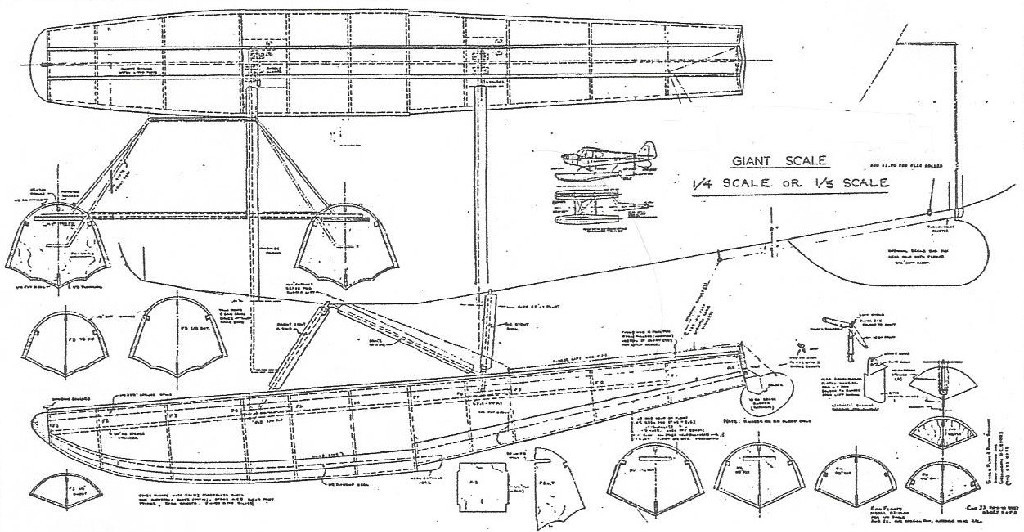
Edo Floats Maintenance Manual

(A word about the profiles: Iam most certainly NOT Tom Tullis or Claes Sundin, so please excuse the basicappearance of these!) These are just to give an idea of how the aircraftlooked at a given time, and salient features are captured as best aspossible. This will be a large project, and will eventually be categorizedin a searchable database by four digit BuNo. This section is currentlyunder development...below is the first 'base profile' for the GoldenWings versions as it appears under development.

Walkaround photos

The majority (if not all) of these photos are ofBuNo 0268, the first production Devastator, and were taken throughout 1937 atthe Douglas factory in Santa Monica (judging by the background). Thisaircraft was subsequently retained for testing by the Navy, later being fittedwith Edo floats as the TBD-1A. Further details are available on the datapage; the aircraft was unceremoniously scrapped on 22 September 1943.


Interior photos

Well, if you can't do a Devastatorwith THESE photos, I don't know what else to tell you. :-) Most ofthese are scanned from original Douglas factory photographs; a couple come fromthe Erection and Maintenance manual, and these are of a slightly fuzzy quality,that's just how they are in the book. Now, the only thing we need arecolor photos...

Pilot's Cockpit:

Bomb and torpedo aiming position:

Gunner/radioman position:

Exterior details:

Technical drawings

Maintenance

Thanks to the unparalleledgenerosity of a fellow modeler, I am now in possession of an Erection andMaintenance Manual for the TBD-1 as well as the Pilot's Notes and an enginemanual..

This page describes typical repairs of the major structural parts of an airplane. When repairing a damaged component or part, consult the applicable section of the manufacturer’s SRM for the aircraft. Normally, a similar repair is illustrated, and the types of material, rivets, and rivet spacing and the methods and procedures to be used are listed. Any additional knowledge needed to make a repair is also detailed. If the necessary information is not found in the SRM, attempt to find a similar repair or assembly installed by the manufacturer of the aircraft.

Floats

To maintain the float in an airworthy condition, periodic and frequent inspections should be made because of the rapidity of corrosion on metal parts, particularly when the aircraft is operated in salt water. Inspection of floats and hulls involves examination for damage due to corrosion, collision with other objects, hard landings, and other conditions that may lead to failure.
NOTE: Blind rivets should not be used on floats or amphibian hulls below the water line.

Sheet-metal floats should be repaired using approved practices; however, the seams between sections of sheet metal should be waterproofed with suitable fabric and sealing compound. A float that has undergone hull repairs should be tested by filling it with water and allowing it to stand for at least 24 hours to see if any leaks develop. [Figure 1]

Corrugated Skin Repair

Some of the flight controls of smaller general aviation aircraft have beads in their skin panels. The beads give some stiffness to the thin skin panels. The beads for the repair patch can be formed with a rotary former or press brake. [Figure 2]
Figure 2. Beaded skin repair on corrugated surfaces

Replacement of a Panel

Damage to metal aircraft skin that exceeds repairable limits requires replacement of the entire panel. [Figure 3] A panel must also be replaced when there are too many previous repairs in a given section or area.
Figure 3. Replacement of an entire panel
In aircraft construction, a panel is any single sheet of metal covering. A panel section is the part of a panel between adjacent stringers and bulk heads. Where a section of skin is damaged to such an extent that it is impossible to install a standard skin repair, a special type of repair is necessary. The particular type of repair required depends on whether the damage is repairable outside the member, inside the member, or to the edges of the panel.

Outside the Member

For damage that, after being trimmed, has 81⁄2 rivet diameters or more of material, extend the patch to include the manufacturer’s row of rivets and add an extra row inside the members.

Inside the Member

For damage that, after being trimmed, has less than 81⁄2 manufacturer’s rivet diameters of material inside the members, use a patch that extends over the members and an extra row of rivets along the outside of the members.

Edges of the Panel

For damage that extends to the edge of a panel, use only one row of rivets along the panel edge, unless the manufacturer used more than one row. The repair procedure for the other edges of the damage follows the previously explained methods.
The procedures for making all three types of panel repairs are similar. Trim out the damaged portion to the allowances mentioned in the preceding paragraphs. For relief of stresses at the corners of the trim-out, round them to a minimum radius of ½-inch. Lay out the new rivet row with a transverse pitch of approximately five rivet diameters and stagger the rivets with those put in by the manufacturer. Cut the patch plate from material of the same thickness as the original or the next greater thickness, allowing an edge distance of 21⁄2 rivet diameters. At the corners, strike arcs having the radius equal to the edge distance.
Chamfer the edges of the patch plate for a 45° angle and form the plate to fit the contour of the original structure. Turn the edges downward slightly so that the edges fit closely. Place the patch plate in its correct position, drill one rivet hole, and temporarily fasten the plate in place with a fastener. Using a hole finder, locate the position of a second hole, drill it, and insert a second fastener. Then, from the back side and through the original holes, locate and drill the remaining holes. Remove the burrs from the rivet holes and apply corrosion protective material to the contacting surfaces before riveting the patch into place.

Repair of Lightening Holes

As discussed earlier, lightening holes are cut in rib sections, fuselage frames, and other structural parts to reduce the weight of the part. The holes are flanged to make the web stiffer. Cracks can develop around flanged lightening holes, and these cracks need to be repaired with a repair plate. The damaged area (crack) needs to be stop drilled or the damage must be removed. The repair plate is made of the same material and thickness as the damaged part. Rivets are the same as in surrounding structure and the minimum edge distance is 2 times the diameter and spacing is between four to six times the diameter. Figure 4 illustrates a typical lightening hole repair.

Repairs to a Pressurized Area

The skin of aircraft that are pressurized during flight is highly stressed. The pressurization cycles apply loads to the skin, and the repairs to this type of structure requires more rivets than a repair to a nonpressurized skin. [Figure 5]
Figure 5. Pressurized skin repair
  1. Remove the damaged skin section.
  2. Radius all corners to 0.5-inch.
  3. Fabricate a doubler of the same type of material as, but of one size greater thickness than, the skin. The size of the doubler depends on the number of rows, edge distance, and rivets spacing.
  4. Fabricate an insert of the same material and same thickness as the damaged skin. The skin to insert clearance is typically 0.015-inch to 0.035-inch.
  5. Drill the holes through the doubler, insertion, and original skin.
  6. Spread a thin layer of sealant on the doubler and secure the doubler to the skin with Clecos.
  7. Use the same type of fastener as in the surrounding area, and install the doubler to the skin and the insertion to the doubler. Dip all fasteners in the sealant before installation.

Stringer Repair

The fuselage stringers extend from the nose of the aircraft to the tail, and the wing stringers extend from the fuselage to the wing tip. Surface control stringers usually extend the length of the control surface. The skin of the fuselage, wing, or control surface is riveted to stringers.

Edo Floats Maintenance Manual Diagram

Stringers may be damaged by vibration, corrosion, or collision. Because stringers are made in many different shapes, repair procedures differ. The repair may require the use of preformed or extruded repair material, or it may require material formed by the airframe technician. Some repairs may need both kinds of repair material. When repairing a stringer, first determine the extent of the damage and remove the rivets from the surrounding area. [Figure 6] Then, remove the damaged area by using a hacksaw, keyhole saw, drill, or file. In most cases, a stringer repair requires the use of insert and splice angle. When locating the splice angle on the stringer during repair, be sure to consult the applicable structural repair manual for the repair piece’s position. Some stringers are repaired by placing the splice angle on the inside, whereas others are repaired by placing it on the outside.

Extrusions and preformed materials are commonly used to repair angles and insertions or fillers. If repair angles and fillers must be formed from flat sheet stock, use the brake. It may be necessary to use bend allowance and sight lines when making the layout and bends for these formed parts. For repairs to curved stringers, make the repair parts so that they fit the original contour.
Figure 7 shows a stringer repair by patching. This repair is permissible when the damage does not exceed two-thirds of the width of one leg and is not more than 12-inch long. Damage exceeding these limits can be repaired by one of the following methods.
Figure 7. Stringer repair by patching
Figure 8 illustrates repair by insertion where damage exceeds two-thirds of the width of one leg and after a portion of the stringer is removed. Figure 9 shows repair by insertion when the damage affects only one stringer and exceeds 12-inch in length. Figure 10 illustrates repair by an insertion when damage affects more than one stringer.
Figure 8. Stringer repair by insertion when damage exceeds two-thirds of one leg in width
Figure 9. Stringer repair by insertion when damage affects only one stringer
Figure 10. Stringer repair by insertion when damage affects more than one stringer

Former or Bulkhead Repair

Bulkheads are the oval-shaped members of the fuselage that give form to and maintain the shape of the structure. Bulkheads or formers are often called forming rings, body frames, circumferential rings, belt frames, and other similar names. They are designed to carry concentrated stressed loads.
There are various types of bulkheads. The most common type is a curved channel formed from sheet stock with stiffeners added. Others have a web made from sheet stock with extruded angles riveted in place as stiffeners and flanges. Most of these members are made from aluminum alloy. Corrosion-resistant steel formers are used in areas that are exposed to high temperatures.

Bulkhead damages are classified in the same manner as other damages. Specifications for each type of damage are established by the manufacturer and specific information is given in the maintenance manual or SRM for the aircraft. Bulkheads are identified with station numbers that are very helpful in locating repair information. Figure 11 is an example of a typical repair for a former, frame section, or bulkhead repair.
Figure 11. Bulkhead repair

  1. Stop drill the crack ends with a No. 40 size drill.
  2. Fabricate a doubler of the same material but one size thicker than the part being repaired. The doubler should be of a size large enough to accommodate 1⁄8-inch rivet holes spaced one inch apart, with a minimum edge distance of 0.30-inch and 0.50-inch spacing between staggered rows. [Figure 12]
  3. Attach the doubler to the part with clamps and drill holes.
  4. Install rivets.

Edo Floats Maintenance Manual Transmission


Edo Floats Maintenance Manual Pdf

Most repairs to bulkheads are made from flat sheet stock if spare parts are not available. When fabricating the repair from flat sheet, remember the substitute material must provide cross-sectional tensile, compressive, shear, and bearing strength equal to the original material. Never substitute material that is thinner or has a cross-sectional area less than the original material. Curved repair parts made from flat sheet must be in the “0” condition before forming, and then must be heat treated before installation.

Edo Floats Maintenance Manual Instructions

RELATED POSTS
Basic Principles of Sheet Metal Repair
Repairability of Sheet Metal Structure
Approval of Repair
Typical Repairs for Aircraft Structures - Longeron-Spar-Rib and Web-Leading Edge-Trailing Edge-Specialized Repairs-Inspection Openings
Comments are closed.